🎉 Up to 70% Off Selected ItemsShop Sale

Bruch, M. - Kol Nidrei, op. 47 - for Cello and Piano - G Henle Verlag URTEXT
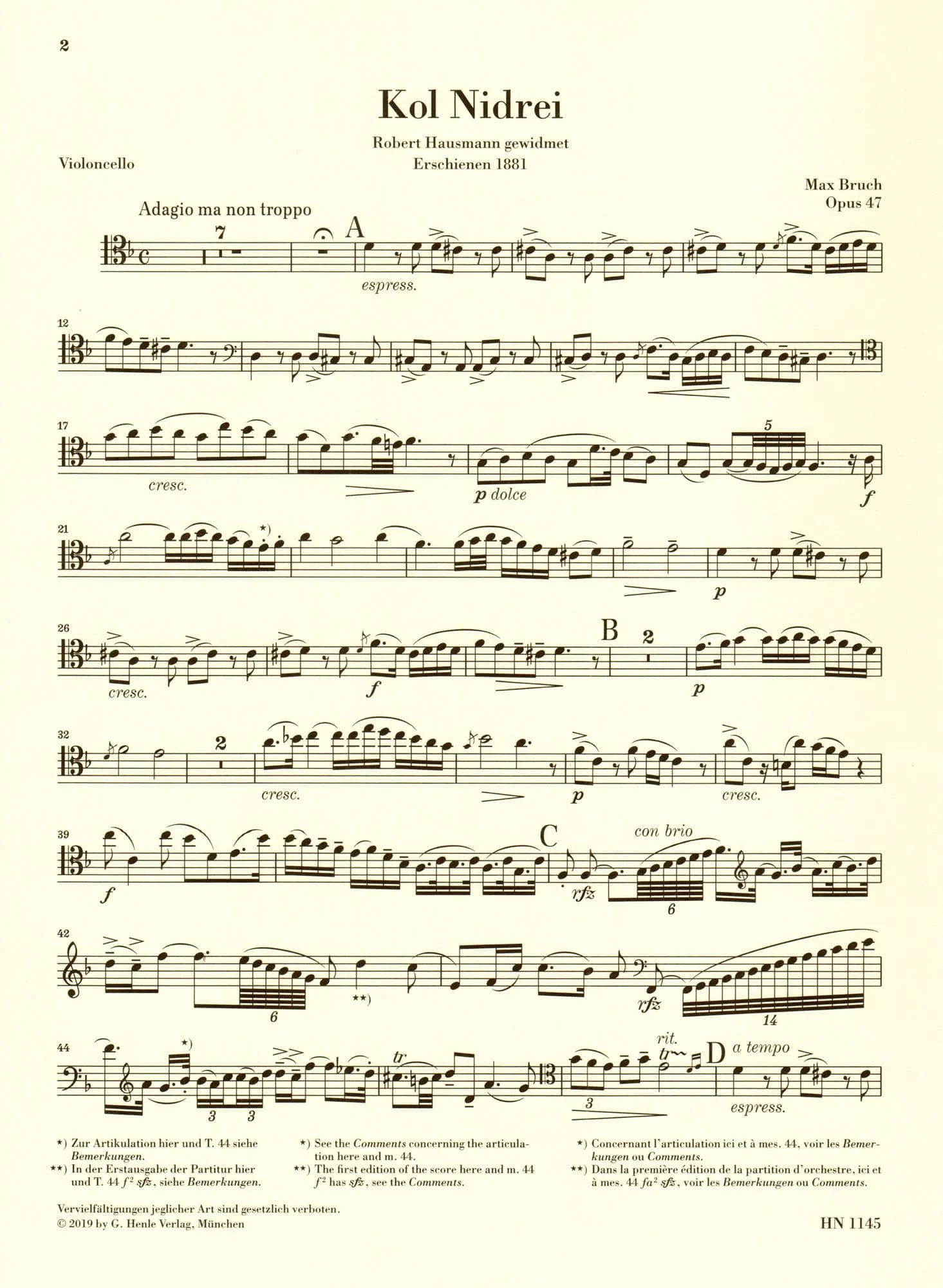
Aside from his popular Violin Concerto no. 1, “Kol Nidrei” numbers among Max Bruch’s most famous compositions. The melancholy “Adagio after Hebrew melodies” was written in 1880 for the cellist Robert Hausmann. It treats two old Jewish songs whose extraordinary beauty proved deeply moving to the Protestant Bruch, by his own admission. The tenor cello sound is the ideal medium for the voice of a Jewish cantor, and thus to this day “Kol Nidrei” offers every cellist a wonderful opportunity to make the instrument “sing”. In this text, based on the first edition of 1881, “Kol Nidrei” appears for the first time in an Urtext edition substantiated by scholarly research, for which not just the musical sources, but also numerous letters and documents from the Max Bruch Archive were consulted. Christian Poltéra was able to be procured for the markings in the solo part.
URTEXT Edition including a supplemental cello part with markings by Christian Poltéra. Published by G. Henle Verlag.
Difficulty: A5 (Advanced)
URTEXT Edition including a supplemental cello part with markings by Christian Poltéra. Published by G. Henle Verlag.
Difficulty: A5 (Advanced)
$3.75
Original: $12.49
-70%Bruch, M. - Kol Nidrei, op. 47 - for Cello and Piano - G Henle Verlag URTEXT—
$12.49
$3.75


Description
Aside from his popular Violin Concerto no. 1, “Kol Nidrei” numbers among Max Bruch’s most famous compositions. The melancholy “Adagio after Hebrew melodies” was written in 1880 for the cellist Robert Hausmann. It treats two old Jewish songs whose extraordinary beauty proved deeply moving to the Protestant Bruch, by his own admission. The tenor cello sound is the ideal medium for the voice of a Jewish cantor, and thus to this day “Kol Nidrei” offers every cellist a wonderful opportunity to make the instrument “sing”. In this text, based on the first edition of 1881, “Kol Nidrei” appears for the first time in an Urtext edition substantiated by scholarly research, for which not just the musical sources, but also numerous letters and documents from the Max Bruch Archive were consulted. Christian Poltéra was able to be procured for the markings in the solo part.
URTEXT Edition including a supplemental cello part with markings by Christian Poltéra. Published by G. Henle Verlag.
Difficulty: A5 (Advanced)
URTEXT Edition including a supplemental cello part with markings by Christian Poltéra. Published by G. Henle Verlag.
Difficulty: A5 (Advanced)