Schumann, Robert - Cello Concerto in a minor, op. 129 for Cello and Piano - Barenreiter Urtext
Schumann, Robert - Cello Concerto in a minor, op. 129 for Cello and Piano - Barenreiter Urtext
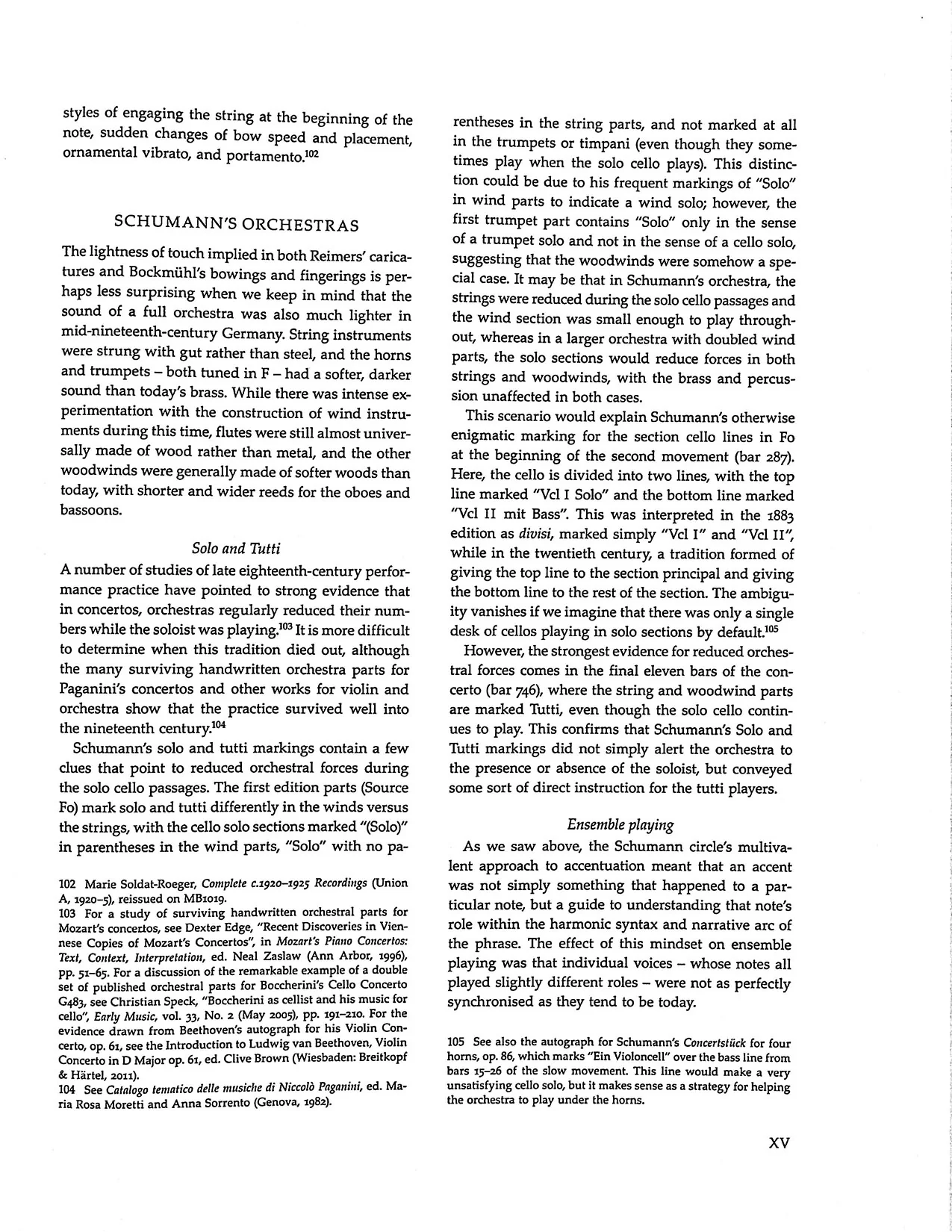
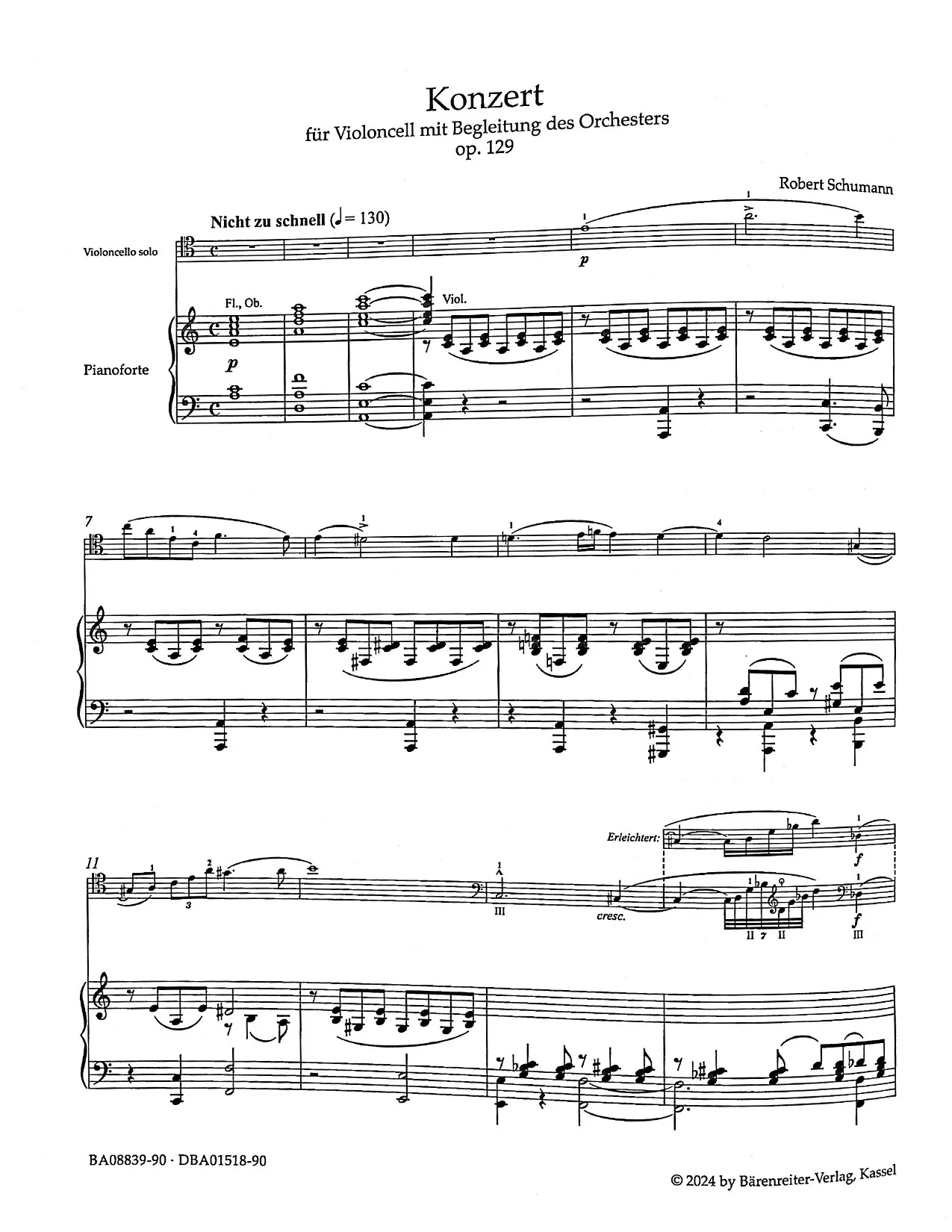
Robert Schumann’s Concerto for Violoncello and Orchestra, Op. 129, is the first major Romantic work of this genre not to have been composed by a cellist. Nevertheless, Schumann, who worked on this late composition for several years, consulted the cellist Emil Bockmühl, who regularly played chamber music in Schumann’s home. Bockmühl’s fingering and bowing were included in the separate cello part of the first edition published by Breitkopf & Härtel in 1854, in which Schumann was involved. The editor of this new Urtext edition re-evaluated the correspondence between Schumann and Bockmühl and gave it particular weight, as it provides an important insight into the collaboration between the composer and performer.
Thus the Bärenreiter Urtext edition is based on the parts of the first edition – no full score was published during Schumann’s lifetime – and on Schumann’s personal copy of the piano reduction. To date though the work is not known in this form – corrected and authorised by the composer – but in the edition edited and altered by Clara Schumann, which was newly engraved in 1883, years after her husband’s death.
This performing edition contains an Introduction (English/German) elucidating the genesis and history of the work, as well as a detailed Critical Commentary (English) which addresses readings and makes comparisons between the performance material authorised by the composer in 1854 and the new editions of the piano reduction and cello part which appeared after Schumann’s death but before Clara’s edition of 1883. Furthermore, this edition offers a commentary on performance practice, written by editor Kate Bennett Wadsworth who is a cellist and specialist in the field of 19th-century cello playing. Instructive videos and further material can be viewed on the Bärenreiter website. Alongside an Urtext solo cello part, the piano reduction contains a second part with fingerings and bowings provided by the editor on the basis of performance practice of the day.

Description
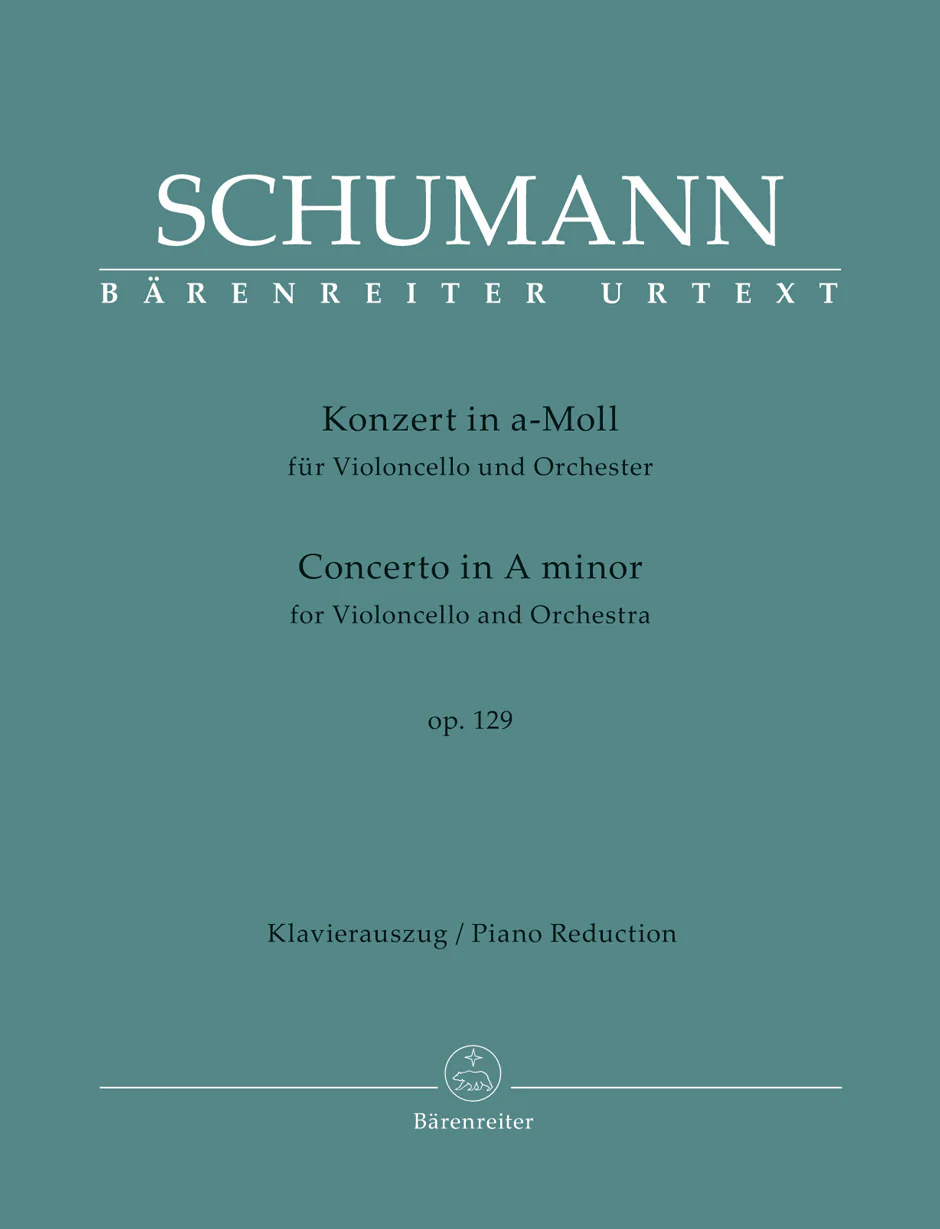
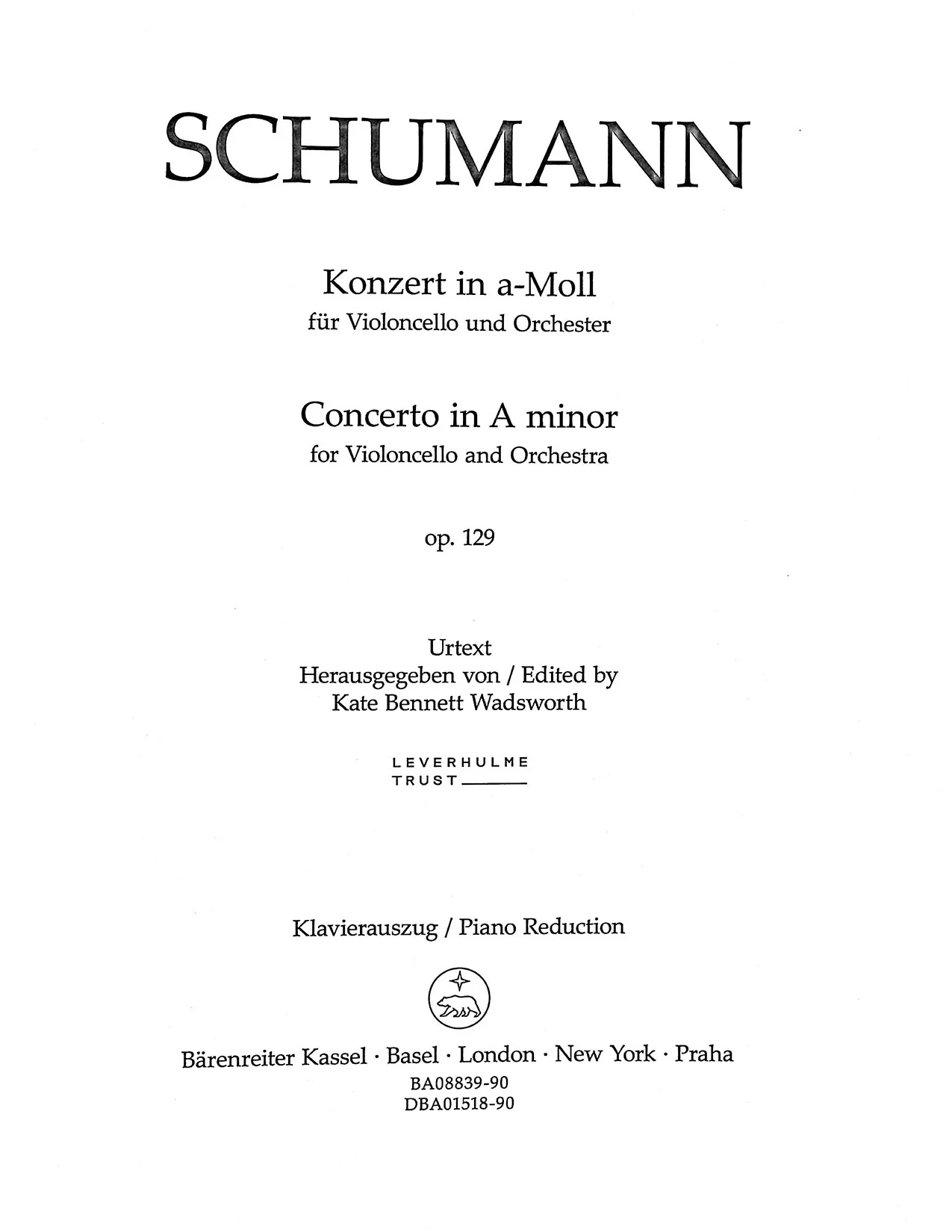
Robert Schumann’s Concerto for Violoncello and Orchestra, Op. 129, is the first major Romantic work of this genre not to have been composed by a cellist. Nevertheless, Schumann, who worked on this late composition for several years, consulted the cellist Emil Bockmühl, who regularly played chamber music in Schumann’s home. Bockmühl’s fingering and bowing were included in the separate cello part of the first edition published by Breitkopf & Härtel in 1854, in which Schumann was involved. The editor of this new Urtext edition re-evaluated the correspondence between Schumann and Bockmühl and gave it particular weight, as it provides an important insight into the collaboration between the composer and performer.
Thus the Bärenreiter Urtext edition is based on the parts of the first edition – no full score was published during Schumann’s lifetime – and on Schumann’s personal copy of the piano reduction. To date though the work is not known in this form – corrected and authorised by the composer – but in the edition edited and altered by Clara Schumann, which was newly engraved in 1883, years after her husband’s death.
This performing edition contains an Introduction (English/German) elucidating the genesis and history of the work, as well as a detailed Critical Commentary (English) which addresses readings and makes comparisons between the performance material authorised by the composer in 1854 and the new editions of the piano reduction and cello part which appeared after Schumann’s death but before Clara’s edition of 1883. Furthermore, this edition offers a commentary on performance practice, written by editor Kate Bennett Wadsworth who is a cellist and specialist in the field of 19th-century cello playing. Instructive videos and further material can be viewed on the Bärenreiter website. Alongside an Urtext solo cello part, the piano reduction contains a second part with fingerings and bowings provided by the editor on the basis of performance practice of the day.